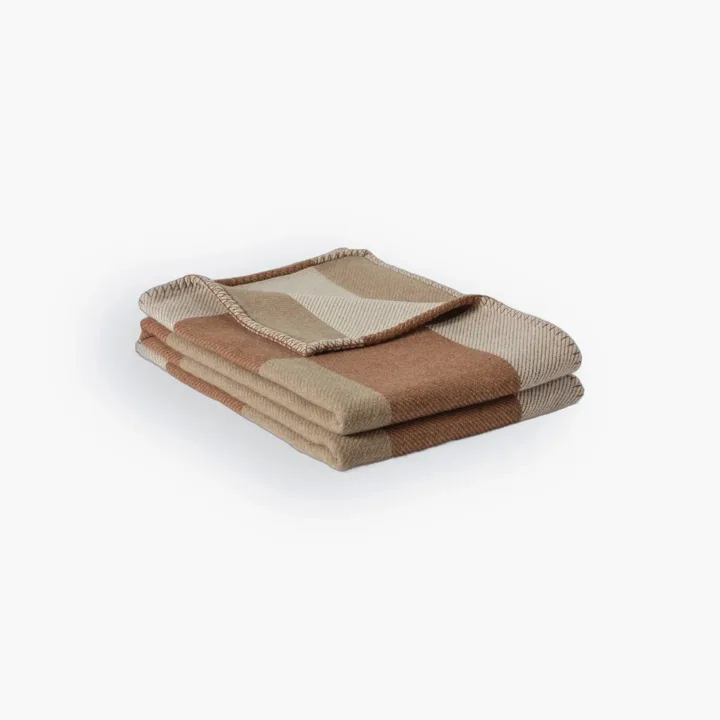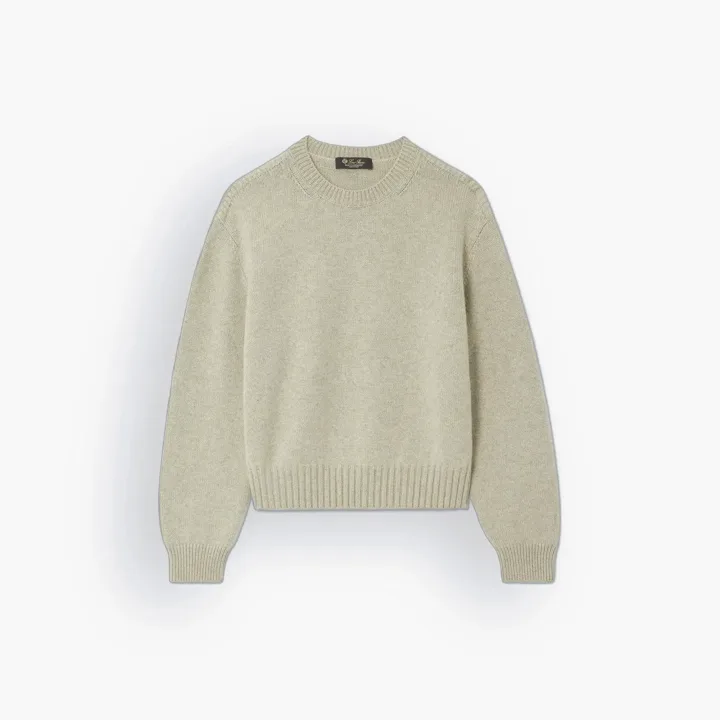

Loro Piana
Cashmere Crewneck Sweater
$1,595
Web app · Luxury gifting
DADO is a luxury gifting platform. I own its 0-to-1 product design for all three launch products, plus roadmap priorities and the QA operation. I’ve worked with a 14-person team through launch.
To respect DADO’s NDA, some specifics are omitted here and shared only in interviews.
TEAM
14-person team, through launch
TIMELINE
Jul to Sep 2026
TOOLS
Figma · FigJam · Airtable · Asana · Amplitude · React / TypeScript · Claude Code
Outcome
Launched to 5,000 invitations, drawing 4,100 users and 41,400 tracked events at a 7% bounce rate on the landing experience. Behind it, 150+ mobile-first flows across three products, shipped in under 3 months.
mobile-first flows shipped in under 3 months
users from 5,000 invitations
tracked events from the launch
bounce rate on the landing experience
DADO is live. It launched invite-only, with 5,000 invitations sent. DADO is built for a luxury audience, and invite-only was a deliberate choice. It let us watch the product perform in a live market and fix what broke before opening the doors wider, and for this audience exclusivity is part of the product.
Figure 1. The information architecture map, the editorial system on top and the gift taxonomy below.
Accounts is where a person’s profile, wishlists, gift history, and sharing live. Sharing started out per list: one visibility setting covered a whole wishlist, so everything on it traveled together, and that leaked. The rebuild closed those privacy gaps across the platform with per-item visibility on a two-tier audience model, close connections and connections, with Only me for anything unshared. It’s enforced in the UI and again in the database’s RLS policy, across wishlists, gift history, and every share link.
PER-ITEM VISIBILITY
Each item carries its own audience: Only me, close connections, or connections.
CONSENT-GATED INVITES
Occasion invitations are consent-gated. No one lands in an occasion without accepting it.
GIFT HISTORY AT 18
A child’s gift history transfers to them at 18, and prices and notes stay withheld.
Figure 2. Profile visibility on staging: each section has its own audience picker, and occasions and preferences carry their own.
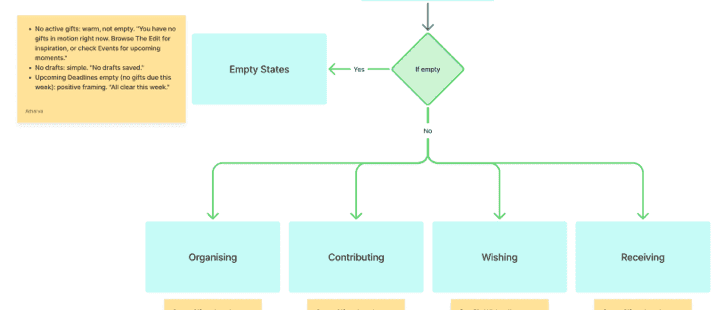
Figure 3. One branch of the Accounts user-flow board, My Gifting with its empty states. Open it for the full board.
Three separate views of the same person had drifted apart: a pop-up, a gift history entry, and account details. I merged them into one autosaving profile page that shows who added each detail. The same pass split the private save list from the public wishlist.
In One Big Wish someone asks for one wish of one to five products, and their people pledge toward a goal set by the item prices. A five-step wish wizard and a four-step contribution rail, on Stripe saved cards. The payments protect contributors from paying for a gift that’s never bought: pledges save the card with an authorization, bigger wishes verify the wisher’s identity, and nothing is charged until purchase. Every error, empty, and edge state has a designed path. The payment model, the wizard, and the progress bar have their own case study.
THE RULE THAT SHAPED THE PAYMENT DESIGN
Everything downstream follows from that one rule: contributors see a non-refundable disclosure before they give, nothing is charged at contribution time, cards are charged in one batch 7 to 10 days before the moment, and a missed goal still has to end in a gift.
When a goal is missed, the wisher chooses how it ends:
Figure 4. The under-funded fork, with three exits that each end in a gift.
One Big Wish case study →
The Edit is DADO’s editorial face, built so discovery feels like reading a magazine and still lands on a product you can gift. Every page runs on the design system, so the tone holds across every guide and category page. Behind it sits a pipeline: editors plan guides in an Airtable calendar, and each entry flows into a templated page on the site.
Figure 5. Editorial surface, commerce underneath: The Edit, gift guides, DADO Editions, and DADO Presents, captured on staging. Open any one to see it full size.
I authored the Figma design system in full: variable collections, tokens, component libraries, responsive breakpoints for phone and desktop, micro-interaction patterns, and transactional email templates, with documented WCAG 2.1 AA standards adopted across product surfaces. DADO is built AI-native, so the system also lives in the repo as DESIGN.md, the file every AI coding session loads before touching the product. Its design-system half is derived from my Figma collections, and designers and engineers both edit the file. The contract holds:
✓
Two typefaces.
✓
A closed color palette.
✓
Zero default radius.
✓
A section titled “What Claude Must Never Do.”
Every AI coding session starts with the same tokens and rules, so design review starts with the same baseline. Engineers build from the PRDs and the design system, and I review each build against the designs. I also mentor the 3 designers hired since, through critique and design review against the same system.
Figure 6. The Figma variables collections (Primitives 123, Theme 77) and a DESIGN.md excerpt. Open the variables to see the full table.
I restructured an earlier 144-case document against the actual codebase routes into a 308-case workbook across nine sections, so coverage claims matched real screens. Every flow is QA-tested on phone, tablet, and desktop.
Figure 7. The QA workbook after the restructure: 308 cases, up from 144, in nine sections, with Asana intake.
Together and Overture are designed and follow the launch.
Together
Group gifting: several people give one gift together for an occasion.
UPCOMING
Overture
One-to-one gifting where the sender never sees the recipient’s address, because DADO holds the address and fulfills the order.
UPCOMING
Picture an employee sending their boss a thank-you gift. The gift arrives, and the home address stays with DADO.
Figure 8. The Overture address boundary: what the sender sees, what DADO holds, what never crosses.
DADO is live. What I’m watching next:
Invite acceptance rate
The first read on the invite-only bet.
Wish creation per active account
Whether the people who get in create wishes.
Contribution completion rate on wishes
Where the four-step rail loses people, if it does.
The under-funded rate
How often the fallback fires determines how much that flow matters.
Next case study
Read the case study →

Anchal Nagdev